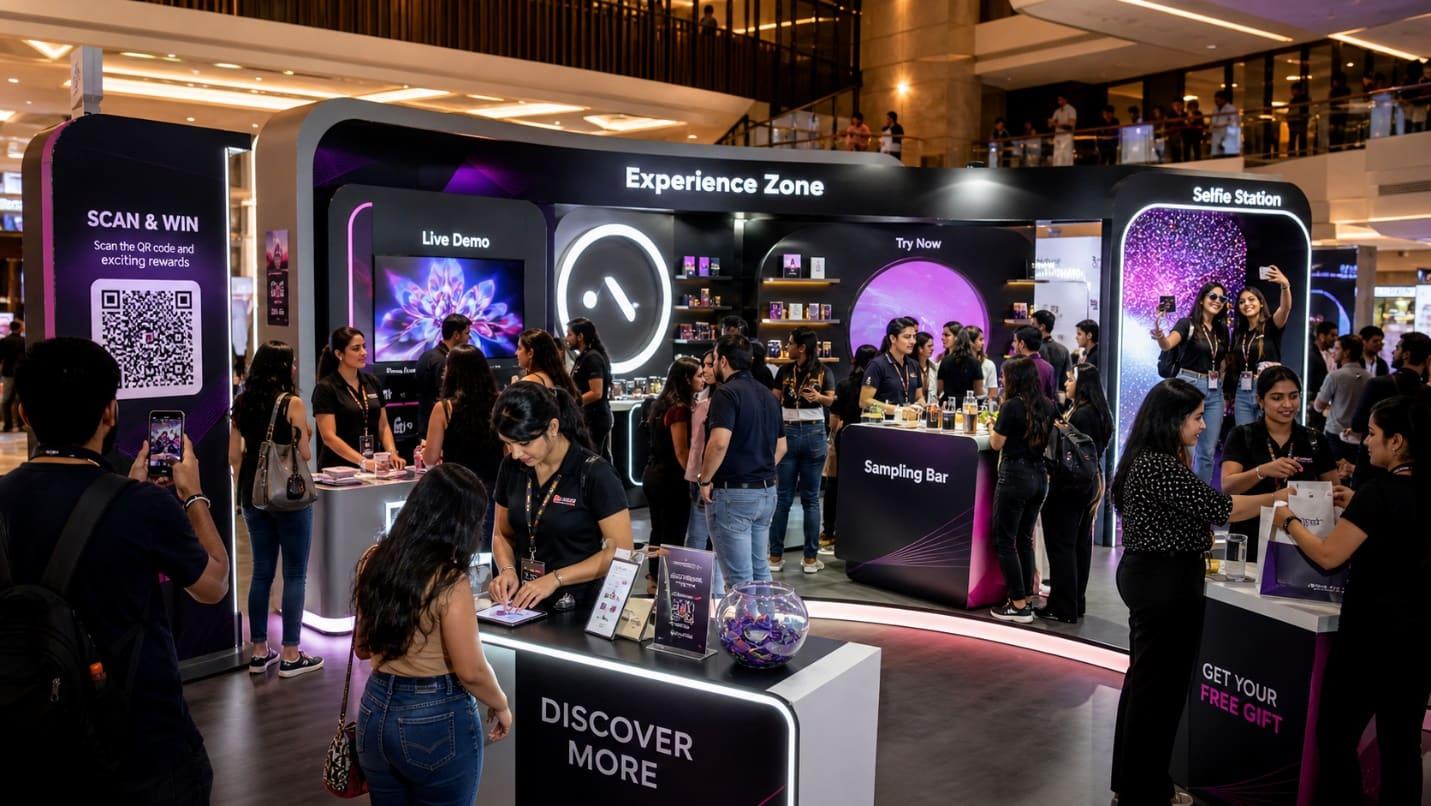
Brand activation is the process of bringing a brand to life through real experiences, direct audience interaction, and memorable engagement. It is not only about showing a logo or promoting a product. It is about creating a meaningful moment where people can see, feel, try, understand, and connect with a brand.
A successful brand activation helps customers experience the brand in a practical and emotional way. It creates attention, builds trust, increases awareness, supports sales, and makes the brand more memorable in the minds of the audience.
What is Brand Activation?
Brand activation is a marketing experience that encourages people to interact directly with a brand, product, or service. It can happen at events, shopping malls, universities, corporate spaces, sports festivals, concerts, exhibitions, or public places.
Key parts of brand activation include:
- Creative concept development
- Product display
- Sampling activities
- Live demonstrations
- Interactive games
- QR code campaigns
- Audience engagement booths
- Giveaways and contests
- Brand storytelling
- Customer feedback collection
- Lead generation
- On-ground promotion
Why Brand Activation Matters
In today’s competitive market, people do not only want to see advertisements. They want to experience brands personally. Brand activation allows a company to communicate directly with its target audience and create a stronger connection.
Brand activation matters because it helps to:
- Increase brand awareness
- Create direct customer engagement
- Build trust and emotional connection
- Make products easier to understand
- Encourage product trial
- Generate leads and customer data
- Support sales and conversion
- Strengthen brand recall
- Create social media buzz
- Make the brand feel more human and approachable
Creative Concept Development
Every successful brand activation starts with a strong creative idea. The concept should match the brand identity, campaign message, audience lifestyle, and event environment.
Creative concept development includes:
- Understanding the brand objective
- Identifying the target audience
- Developing a campaign theme
- Creating the activation idea
- Planning the audience journey
- Designing the booth or experience zone
- Creating key messages
- Connecting the concept with the product or service
- Making the experience simple, attractive, and memorable
Audience Understanding
A brand activation must be designed for the right audience. Different audiences respond to different types of experiences. Youth, families, corporate guests, students, professionals, and sports fans may all require different engagement approaches.
Audience planning includes:
- Identifying the target customer group
- Understanding audience interests
- Studying lifestyle and behavior
- Choosing the right location
- Selecting the right engagement activity
- Planning communication style
- Designing rewards or offers
- Creating participation-friendly experiences
Product Display and Experience
Product display is an important part of brand activation. The product should be presented in a way that attracts attention and encourages people to explore it.
Product experience may include:
- Product showcase counters
- Premium display stands
- Trial stations
- Touch-and-feel experiences
- Live demonstrations
- Before-and-after comparison
- Product explanation by brand ambassadors
- Sample distribution
- Customer testing areas
- Visual storytelling around the product
Interactive Engagement Activities
Interactive activities make brand activation more exciting. They encourage people to spend more time with the brand and create positive memories.
Interactive activities may include:
- Spin-the-wheel games
- Quiz competitions
- Digital games
- QR code challenges
- Photo booth activities
- AR or VR experiences
- Lucky draws
- Puzzle games
- Skill challenges
- Social media contests
- Instant reward activities
- Brand-themed challenges
Sampling and Product Trial
Sampling is one of the most effective ways to introduce a product to customers. When people try a product directly, they understand its quality better and feel more confident about the brand.
Sampling activities include:
- Free product trials
- Taste testing
- Demo usage
- Trial packs
- Product experience corners
- Customer reaction collection
- Feedback forms
- Discount coupon distribution
- Purchase encouragement after trial
Brand Ambassadors and Promoters
Brand ambassadors play an important role in brand activation. They represent the brand, explain the product, guide the audience, and create a friendly experience.
Brand ambassador responsibilities include:
- Welcoming visitors
- Explaining product benefits
- Guiding people through activities
- Encouraging participation
- Collecting customer information
- Managing giveaways
- Supporting product demonstrations
- Maintaining brand tone and professionalism
- Creating a positive customer experience
Booth and Experience Zone Design
A well-designed booth or experience zone helps attract people and makes the brand look professional. The design should be visually appealing, easy to enter, and comfortable for visitors.
Booth design includes:
- Creative structure
- Brand color and visual identity
- Product display area
- Interactive activity space
- LED screen or digital display
- Photo corner
- Sampling counter
- Information desk
- Storage area
- Clear visitor movement path
- Attractive lighting and décor
QR Code and Digital Engagement
Digital tools make brand activation more interactive and measurable. QR codes, digital forms, social media challenges, and online registration can connect on-ground audiences with online platforms.
Digital engagement may include:
- QR code scanning
- Online registration
- Digital coupons
- Social media follow campaigns
- Instant contest participation
- Website or landing page visits
- Lead form submission
- App download campaigns
- Digital lucky draws
- Online feedback collection
Lead Generation and Customer Data
Brand activation can help brands collect valuable customer information. This data can be used for future marketing, sales follow-up, and audience analysis.
Lead generation includes:
- Name and contact collection
- QR-based registration
- Email subscription
- Customer interest forms
- Product preference questions
- Feedback collection
- Sales inquiry recording
- Discount or coupon registration
- Database creation for future campaigns
Social Media Buzz
A strong brand activation can create powerful social media reach. When people enjoy an experience, they often take photos, share stories, and post about it online.
Social media buzz can be created through:
- Branded photo booths
- Hashtag campaigns
- Share-and-win contests
- Influencer visits
- Reel-friendly moments
- Live updates
- User-generated content
- Audience tagging activities
- Giveaway announcements
- Event highlight videos
Sponsorship and Event Integration
Brand activation becomes more powerful when it is properly integrated into an event. The activation should feel like a natural part of the event experience, not just a separate promotional stall.
Event integration includes:
- Sponsor booth placement
- Stage mention
- LED screen visibility
- Product placement
- Audience activity zone
- Branded games
- Event-themed packaging
- Ticket or wristband branding
- Sponsor-led contests
- Post-event content visibility
On-Ground Execution
Good execution is the most important part of brand activation. Even a strong idea can fail if the on-ground team is not well-managed.
On-ground execution includes:
- Booth setup supervision
- Staff briefing
- Product stock management
- Promoter coordination
- Audience flow control
- Activity management
- Giveaway distribution
- Technical support
- Lead collection monitoring
- Real-time problem-solving
- Daily performance tracking
Measuring Success
A professional brand activation should be measured properly. Brands need to understand what result they received from the campaign.
Success can be measured through:
- Number of visitors
- Number of participants
- Product samples distributed
- Leads collected
- QR scans
- Social media engagement
- Sales inquiries
- Coupon redemptions
- Customer feedback
- Photos and videos shared
- Sponsor or client satisfaction
Post-Activation Follow-Up
The value of brand activation continues after the event ends. Post-activation follow-up helps convert audience interest into long-term customer relationships.
Post-activation activities include:
- Thank-you messages
- Follow-up calls or emails
- Coupon delivery
- Sales team handover
- Lead database analysis
- Campaign performance report
- Photo and video recap
- Social media highlights
- Client reporting
- Future campaign planning
Types of Brand Activation
Brand activation can be designed in different formats depending on the brand objective, product category, and target audience.
Common types include:
- Product launch activation
- Sampling campaign
- Mall activation
- University activation
- Sports event activation
- Concert activation
- Corporate activation
- Roadshow campaign
- Retail activation
- Exhibition activation
- Digital activation
- Influencer-led activation
- Community activation
Our Main Focus
Our focus is to create brand activation experiences that are creative, engaging, professional, and result-driven. We believe a brand becomes stronger when people can experience it directly.
We focus on:
- Creative brand storytelling
- Direct audience interaction
- Strong visual presentation
- Product trial and experience
- Lead generation
- Social media engagement
- Smooth on-ground execution
- Sponsor and client value
- Customer trust building
- Long-term brand impact
Conclusion
Brand activation is one of the most effective ways to connect a brand with its audience. It turns marketing into a real experience and gives people a reason to remember the brand.
With the right concept, creative design, audience engagement, professional execution, and proper follow-up, brand activation can increase awareness, build trust, generate leads, support sales, and create a lasting emotional connection between the brand and its customers.